The Bahá’í House of Worship in Delhi, popularly known as the Lotus Temple, is one of eight Bahá’í Houses of Worship worldwide and is considered the "Mother Temple of the Indian subcontinent." The building is located in the sou…
The Bahá’í House of Worship in Delhi, popularly known as the Lotus Temple, is one of eight Bahá’í Houses of Worship worldwide and is considered the "Mother Temple of the Indian subcontinent." The building is located in the sou…
Travelers in India system23 March 20202 min read
Travelers helping travelers
The traveler community in India
Choose a suitable group by your destination or region in the official community directory.
The Bahá’í House of Worship in Delhi, popularly known as the Lotus Temple, is one of eight Bahá’í Houses of Worship worldwide and is considered the "Mother Temple of the Indian subcontinent." Located in southern New Delhi, India’s capital, it has appeared in hundreds of publications and won several architectural awards. Its architect, Fariborz Sahba, also helped plan and design the terraces at the Bahá’í World Centre in Haifa. Its distinctive design was inspired by the lotus, India’s national flower.
History
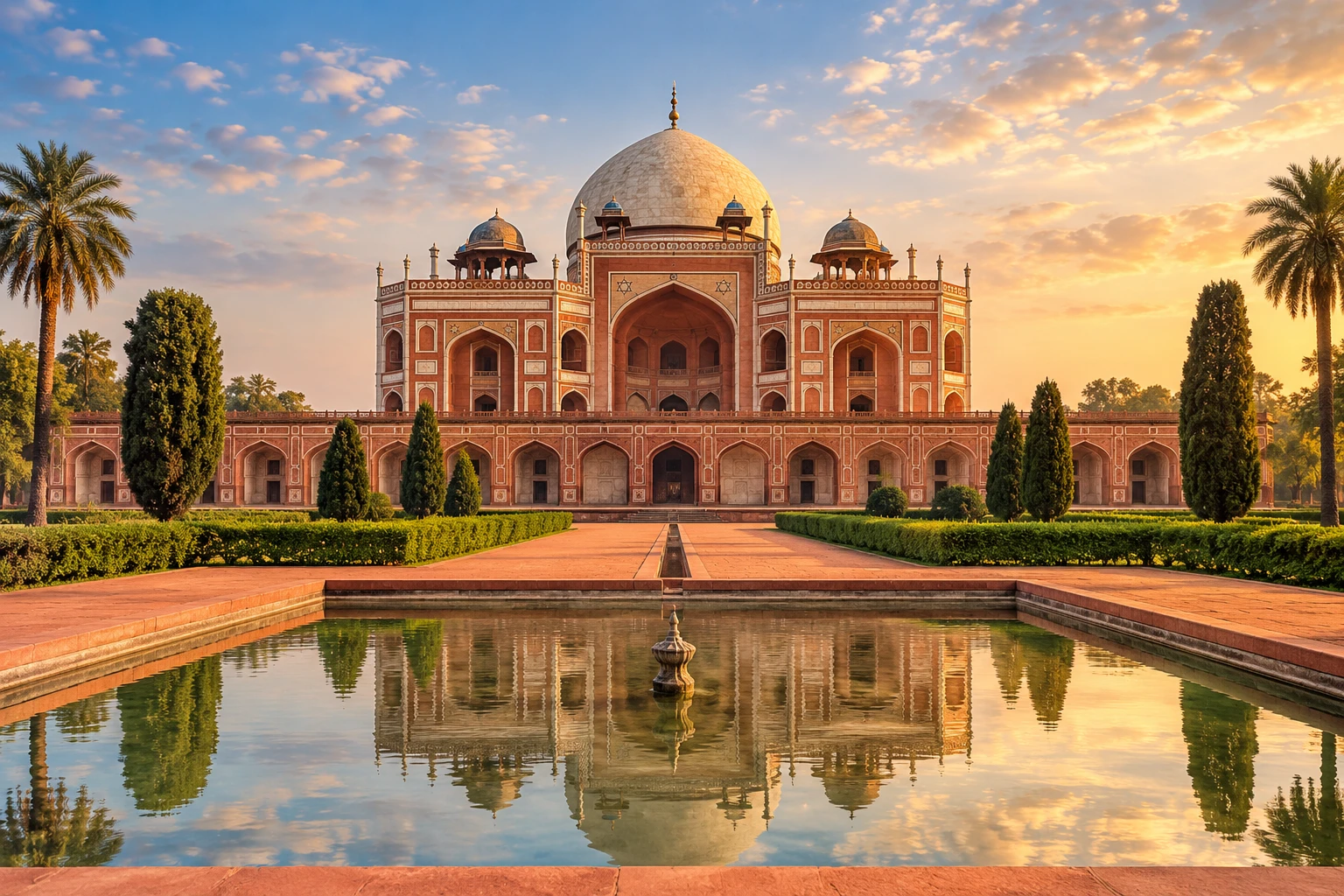
דלהי – המחשת AI · AI illustration Planning and construction took around ten years and involved 800 professionals. The drawings and design alone took 18 months, and several full-scale models were built to test feasibility and proposed construction methods. 700 builders and carpenters worked on the site at any given time, using both traditional and modern building techniques extensively. The building was dedicated on December 24, 1986, in the presence of 8,000 people, and opened to the public on January 1, 1987.
The Building
Like other Bahá’í Houses of Worship, the building has nine sides and nine entrances. It consists of petal-shaped surfaces, three on each of its nine sides, for a total of 27. The building stands just over 40 meters tall. All the "petals" rise from a shared base to three different heights, creating the appearance of a flower. The two inner rows of petals curve inward and cover the inner dome, while the outer row curves outward, its nine petals sheltering the temple’s nine doorways. The inner petals do not fully enclose the building, allowing light to enter through the inner dome. The petals are made of white reinforced concrete and clad in white marble tiles sourced from Mount Penteli in Greece and processed in Italy, with a protective coating against moisture. The double-layered inner dome is supported by 54 interconnected beams, and the central hall is surrounded by nine arches that support the building’s frame. The hall can accommodate up to 2,500 people. Its central floor is white marble, while the surrounding floor, stairs and walkways are red sandstone. Nine paths lead to the nine entrances, with nine ornamental pools between them resembling sepals. The pools cool the air inside and around the building and reflect its image. The building and gardens cover around 105 dunams. A separate building on the grounds serves as a visitor center, housing a library and administrative offices. The House of Worship has welcomed more than 50 million visitors and is considered the world’s most visited building. Around 2.5 million people visit each year, with daily numbers reaching around 100,000 during Hindu festivals.
Still planning your trip?
Guides, groups and services for travelers in India